
Therapy-Content Strategy: Topics
Key Takeaways for a Therapist Content Marketing Strategy
Content marketing can be more effective than traditional marketing, often resulting in higher lead generation at lower costs.
Over 50% of U.S. adults seeking mental health treatment actively search for providers online.
Sharing valuable content builds long-lasting client loyalty, according to 63% of marketers surveyed.
Strategic content calendars attract more clients and establish digital presence for therapy practices.
Why Does Content Strategy Matter For Therapists?
How does ethical content build client trust?
What should a therapist's content actually accomplish?
Educates visitors on conditions, treatment modalities, and what therapy actually involves
Demonstrates the practice's unique clinical voice and specialty focus
Protects client confidentiality while still showcasing real therapeutic value

What Blog Topics Attract The Right Clients?
Can therapists write about real client cases?
Educational explainers on therapeutic approaches (CBT, EMDR, family systems) written in plain language
Common-question posts answering what clients typically ask before their first session
Practice-specific insights highlighting a clinician's specialty without referencing identifiable clients
Community and access topics covering insurance, scheduling, and what therapy actually involves
Why does location matter for blog topic selection?

How Do You Build A Content Calendar That Sticks?
What should go on a therapist's content calendar?
Educational blog posts answering common client questions
Seasonal or awareness-month campaigns
Service and specialty highlights
Ethical, compliant testimonial features
Local community or referral-partner content
How does compliance fit into calendar planning?

Which Social Media Content Ideas Work Best?
What Types of Posts Perform Best for Therapy Practices?
How Do We Organize These Ideas Without Losing Consistency?
Educational: symptom awareness, therapy myths, treatment explanations
Trust-building: practice values, credentials, approach to care
Community: local resources, seasonal mental health observances
Engagement: polls, prompts, and reflective questions
How Can Client Reviews Fit Ethically Into Content?
What makes a client review HIPAA-compliant?
What must happen before a review goes live?
Informed consent obtained in writing before any personal health information is shared publicly
Confidentiality maintained throughout collection, storage, and publication
Secure platforms used for gathering and hosting testimonials, never open forms or unsecured email
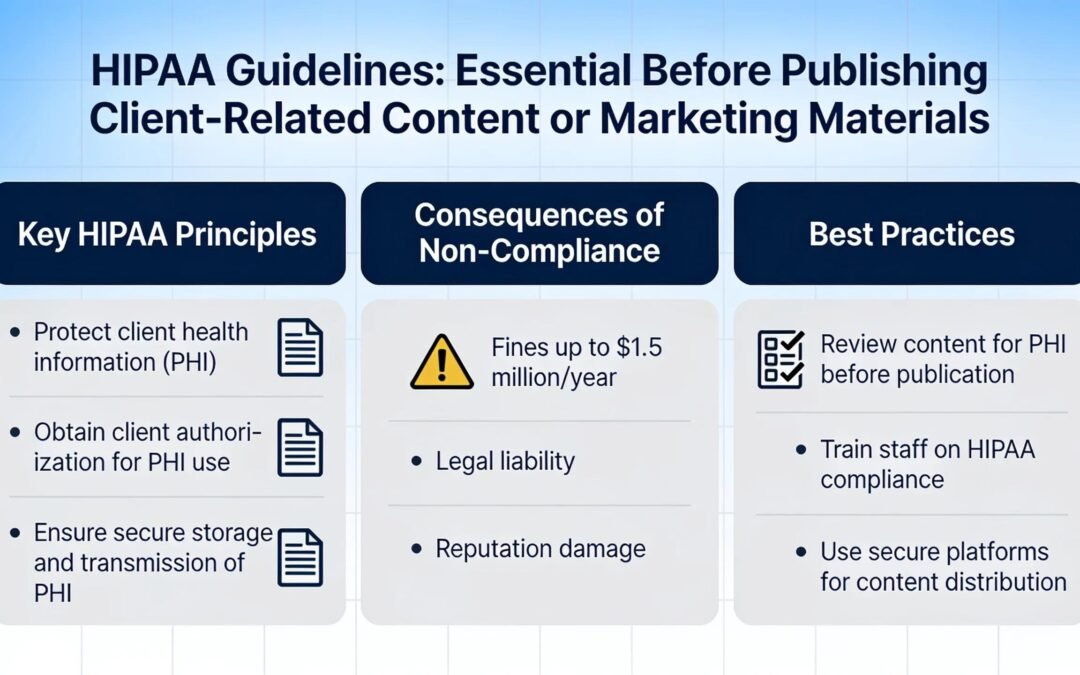
What HIPAA Rules Govern Therapist Content Marketing?
Do HIPAA rules apply to testimonials and reviews?
Can paid advertising fit into a compliant plan?
Confirm written, informed consent before referencing any client experience
Route all feedback collection through secure, encrypted platforms
Mirror the same secure contact methods used elsewhere on the practice website
Audit content calendars and blog topic ideas quarterly for lingering compliance risk
How Do You Plan Content Around Key Dates?
What should a content calendar for a therapy practice include?
National observances — awareness months and days tied to mental health broadly or specific conditions
Seasonal transitions — back-to-school stress, vacation grief, New Year burnout
Practice milestones — anniversaries, new service launches, provider additions
Does awareness-based content still need to follow HIPAA rules?
FAQ
Why does content strategy matter for therapists?
What should therapy content actually accomplish?
How do blog topics attract the right clients?
Facts
Mental Marketing is located in US.