

Key Takeaways
A therapist logo is optional but strengthens visual identity when designed alongside a website for cohesive branding.
A visual identity is the complete system of colors, typography, and imagery that makes a therapy practice recognizable and trustworthy.
A scattered presentation signals disorganization, and clients seeking mental health support interpret that signal as risk.
The practice name, clinical focus, and target client demographic must all be settled before any logo work begins.
Why does your practice need a visual identity?
Is branding more than just a logo?
Select a color palette that evokes calm and professionalism.
Choose typography for readability and tone.
Apply imagery consistently on the website, intake pages, and directory listings.
Align every visual element with the practitioner's therapeutic approach.

What prerequisites do you need before designing?
What should a therapist clarify before hiring a designer?
Practice name. Confirm the legal and public-facing name before any visual work begins.
Clinical focus. Define the specific population or presenting concern the practice serves.
Target client demographic. Identify who the practice exists to help and what that person needs to feel safe.
Why do brand guidelines matter before choosing colors?
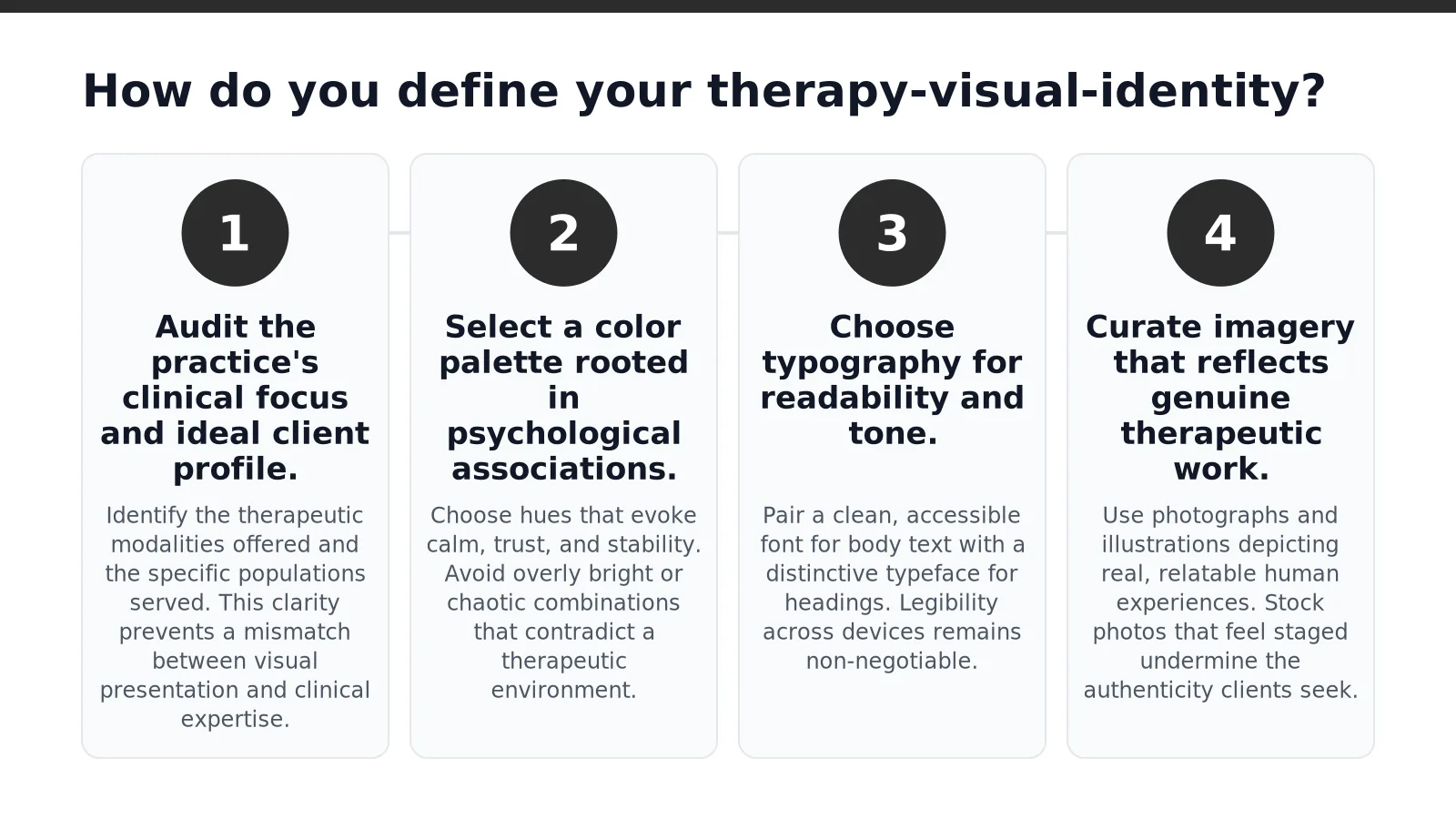
How do you define your therapy-visual-identity?
What elements make up a cohesive therapy visual identity?
Audit the practice's clinical focus and ideal client profile. Identify the therapeutic modalities offered and the specific populations served. This clarity prevents a mismatch between visual presentation and clinical expertise.
Select a color palette rooted in psychological associations. Choose hues that evoke calm, trust, and stability. Avoid overly bright or chaotic combinations that contradict a therapeutic environment.
Choose typography for readability and tone. Pair a clean, accessible font for body text with a distinctive typeface for headings. Legibility across devices remains non-negotiable.
Curate imagery that reflects genuine therapeutic work. Use photographs and illustrations depicting real, relatable human experiences. Stock photos that feel staged undermine the authenticity clients seek.
How do brand guidelines support ethical marketing?
Why does logo design matter for therapists?
What are the first steps in logo-design-therapists?
Do I need a logo before launching my therapy website?
Assess your internal capacity for design. Determine whether you have the time and skill to produce a simple, clean mark yourself. This path works for solo practitioners launching on a lean budget. The result must remain legible at small sizes and avoid complex imagery that distracts from the therapeutic message.
Evaluate the need for a professional designer. Engage a specialist when your practice requires a custom mark that integrates seamlessly with a broader therapy-visual-identity. A professional delivers a cohesive result across every touchpoint.
Align the logo timeline with your website project. We always recommend integrating logo creation with website design. A mark built in isolation often clashes with the site's layout, color palette, or typography. Designing both together produces a unified visual-style-therapy that feels intentional and calming to potential clients.
Should I design my therapy logo myself or hire a professional?
How do you create brand-guidelines-therapy?
What elements belong in therapy brand guidelines?
How do ethical standards shape therapy brand guidelines?
Audit existing marketing materials for consistency gaps.
Select a color palette that evokes calm and professionalism.
Choose accessible typography with clear readability on all devices.
Define logo-design-therapists usage rules for every format.
Document imagery guidelines that avoid triggering or stigmatizing visuals.
Embed ethical review checkpoints into the content approval workflow.
How do you develop a visual-style-therapy?
What elements make up a therapy visual identity?
How do you avoid cliché imagery in therapy branding?
How do you maintain consistency across platforms?
What common mistakes should you avoid?
Why do complex logos fail in therapy branding?
How does skipping brand strategy damage your practice?
What are the risks of ignoring HIPAA in visual marketing?
Define your brand strategy first. Articulate your practice's core values, ideal client, and therapeutic approach before selecting any visual elements. This foundation guides every design decision.
Choose a simple, recognizable logo. Select imagery that conveys warmth and professionalism without complexity. Test the design at small sizes to confirm legibility.
Audit all materials for HIPAA compliance. Review every visual asset for potential privacy violations. Remove any element that could expose client information or imply an endorsement.