

Key Takeaways
APA Ethics Code 5.05 prohibits soliciting testimonials from current therapy clients.
Review consent forms must specify exactly what the client authorizes sharing and where the review appears.
No protected health information, including diagnosis details or treatment dates, appears in any facilitated review.
Three major professional ethics codes prohibit soliciting testimonials from current therapy clients.
What makes a review HIPAA-compliant?
How does informed consent work for therapy reviews?
What information must stay out of a compliant review?
Compliant Review Content | Non-Compliant Review Content |
|---|---|
Office atmosphere and staff friendliness | Specific diagnosis or treatment methods |
Ease of scheduling appointments | Dates or frequency of sessions |
General satisfaction with care quality | Medication names or dosages |
Therapist's communication style | Details about other providers involved |

Which ethics codes restrict client testimonials?
Why do ethics codes treat client testimonials differently from other reviews?
How does Mental Marketing Pros address these restrictions?
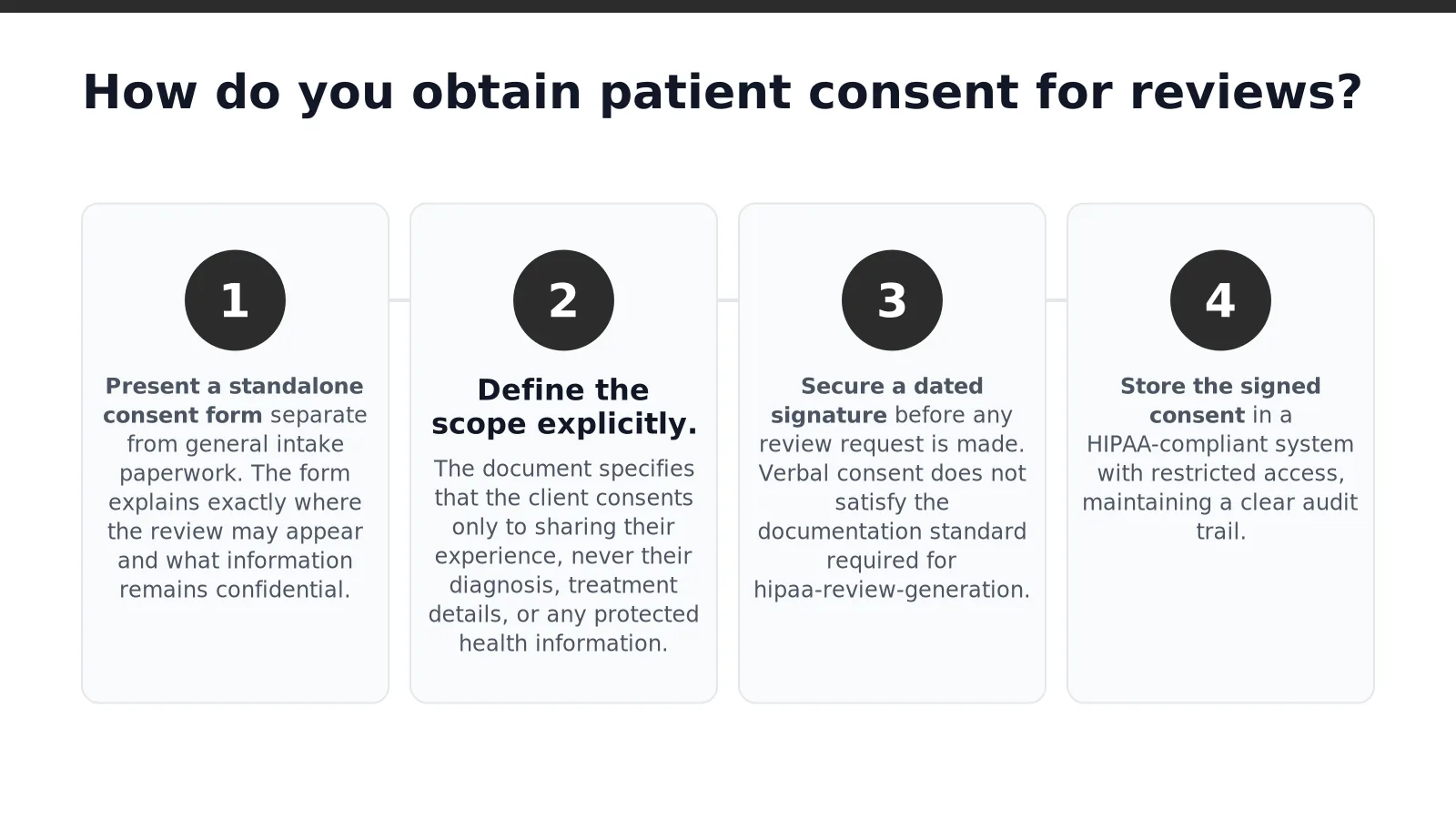
How do you obtain patient consent for reviews?
Present a standalone consent form separate from general intake paperwork. The form explains exactly where the review may appear and what information remains confidential.
Define the scope explicitly. The document specifies that the client consents only to sharing their experience, never their diagnosis, treatment details, or any protected health information.
Secure a dated signature before any review request is made. Verbal consent does not satisfy the documentation standard required for hipaa-review-generation.
Store the signed consent in a HIPAA-compliant system with restricted access, maintaining a clear audit trail.
What should a review consent form include?
Can a client withdraw consent after posting?
What should a review request template include?
How do we obtain valid consent for a review request?
What confidentiality language belongs in the template?
How do we structure the actual request?
State the voluntary nature of the request in plain language at the top.
Specify the platform where the review will appear and confirm the client's comfort with that visibility.
Provide sample language that avoids clinical details while capturing the therapeutic relationship.
Include a direct link to a HIPAA-compliant feedback collection tool.
Close with a reminder that the client may revoke consent at any time.
Which platforms are safe for collecting reviews?
What makes a review platform HIPAA-compliant for therapy practices?
How do secure platforms support ethical review collection?
Business Associate Agreement availability and scope
Encryption standards for data in transit and at rest
Consent management and audit trail capabilities
Integration with existing practice management systems
Review moderation controls that prevent PHI exposure
How do you respond to reviews without violating HIPAA?
What can you safely say in a public review response?
How do you handle negative reviews while staying compliant?
What template works for most review responses?
Open with "We appreciate your feedback" or a similar neutral phrase.
Never use the reviewer's name or reference their specific comments.
Include a general statement about the practice's commitment to care.
Offer a secure, private channel for further discussion if needed.
What are common HIPAA review mistakes to avoid?
What happens when a review reveals too much?
How do we prevent ethical violations in review collection?
Screen every review request against current client status and vulnerability factors.
Use review-request-templates that never reference treatment details or session specifics.
Obtain documented patient-consent-reviews before publishing any client-authored content.
Monitor published reviews for inadvertent PHI disclosure and address findings immediately.
How can a marketing partner ensure compliant growth?
Ethics-code alignment across all channels. We map every marketing tactic to the APA Ethics Code 5.05 prohibition on soliciting testimonials from vulnerable clients and the ACA Code A.3.b restrictions. This means our ethical-reviews-therapy framework never pressures current patients. Instead, we design compliant feedback loops that respect the therapeutic relationship while building your online reputation.
Secure data handling from first click to intake. Our HIPAA-compliant digital marketing infrastructure encrypts all patient information across websites, forms, and ad platforms. A single unsecured contact form exposes your entire practice to breach liability.
Structured growth through the Wellness Booking Blueprint. This proprietary system helps practices multiply bookings and grow their client base 2 to 5 times. The blueprint sequences patient-consent-reviews protocols, review-request-templates, and hipaa-review-generation workflows into a repeatable system. Each step documents consent before any public-facing feedback appears.