

A therapist logo is optional but strengthens visual identity when designed alongside a website for cohesive branding. Mental Marketing integrates logo design with HIPAA-compliant digital strategies, ensuring colors, typography, and imagery align across all client touchpoints. This approach builds trust and professional recognition for private practices.

Key Takeaways

  • A therapist logo is optional but strengthens visual identity when designed alongside a website for cohesive branding.

  • A visual identity is the complete system of colors, typography, and imagery that makes a therapy practice recognizable and trustworthy.

  • A scattered presentation signals disorganization, and clients seeking mental health support interpret that signal as risk.

  • The practice name, clinical focus, and target client demographic must all be settled before any logo work begins.

Why does your practice need a visual identity?

A logo alone cannot carry that weight. Designing a logo and website together creates a more cohesive visual identity, with visual elements that work naturally across every page.

The stakes are higher than aesthetics. Without a deliberate visual system, prospective clients encounter a fragmented experience that erodes confidence before the first phone call. ### What does a logo actually do for a therapist?

A logo functions as an identifying mark of a brand. It helps potential clients recognize and remember a practice. A professional therapist logo works from this principle: the mark is a recognition tool, not a substitute for the full brand.

Is branding more than just a logo?

Branding for therapists extends far beyond aesthetics. The real brand is the practitioner: the experience, the approach, and the transformation therapy provides. Colors and fonts support that identity. They do not replace it.

Brand-guidelines-therapy documents this distinction. A cohesive visual-style-therapy system includes:

  1. Select a color palette that evokes calm and professionalism.

  2. Choose typography for readability and tone.

  3. Apply imagery consistently on the website, intake pages, and directory listings.

  4. Align every visual element with the practitioner's therapeutic approach.

Mental Marketing Pros builds HIPAA-compliant branding systems that keep this alignment intact. Our branding and identity services help practices present a professional, trustworthy front without compromising confidentiality or ethical standards.

What prerequisites do you need before designing?

A therapist needs three foundational elements before any logo work begins. The practice name, the clinical focus, and the target client demographic must all be settled first. Skipping these prerequisites produces a therapy-visual-identity that looks polished but fails to connect with the people who need the services.

Logo-design-therapists work best when the strategic groundwork is complete. AAMFT's affinity partner zynnyme notes that most therapists instinctively reach for colors, fonts, and sleek logos when starting a private practice. That instinct skips the real brand work. The real brand is the therapist, not the aesthetic wrapper around the name.

What should a therapist clarify before hiring a designer?

We recommend resolving these items in order:

  1. Practice name. Confirm the legal and public-facing name before any visual work begins.

  2. Clinical focus. Define the specific population or presenting concern the practice serves.

  3. Target client demographic. Identify who the practice exists to help and what that person needs to feel safe.

Each item shapes the visual direction. A couples therapist serving anxious partners needs different imagery than a child psychologist serving families. Without that clarity, the design process stalls or produces work that misses the mark.

Why do brand guidelines matter before choosing colors?
Brand-guidelines-therapy establish the strategic foundation that aesthetics should follow. The visual style flows from the strategy, not the reverse. When a therapist defines the practice name, clinical focus, and target demographic first, the visual-style-therapy decisions become straightforward. Colors, typography, and imagery then serve a defined purpose rather than personal preference.

How do you define your therapy-visual-identity?

A therapy-visual-identity communicates safety, professionalism, and clinical focus to prospective clients. This identity shapes the first impression a potential client forms when encountering a practice online. Without a clear visual identity, practices lose the immediate trust that converts a website visitor into a scheduled consultation.

Defining this identity requires a structured, intentional process. We approach it as a strategic foundation, not an aesthetic afterthought. Follow these steps to build a visual identity that aligns with ethical standards and attracts the right clients.

What elements make up a cohesive therapy visual identity?

A cohesive visual-style-therapy framework includes colors, typography, and imagery that work naturally together across every platform. Designing these elements in unison creates consistency from a website header to a social media graphic. Fragmented visuals confuse prospective clients and erode professional credibility.

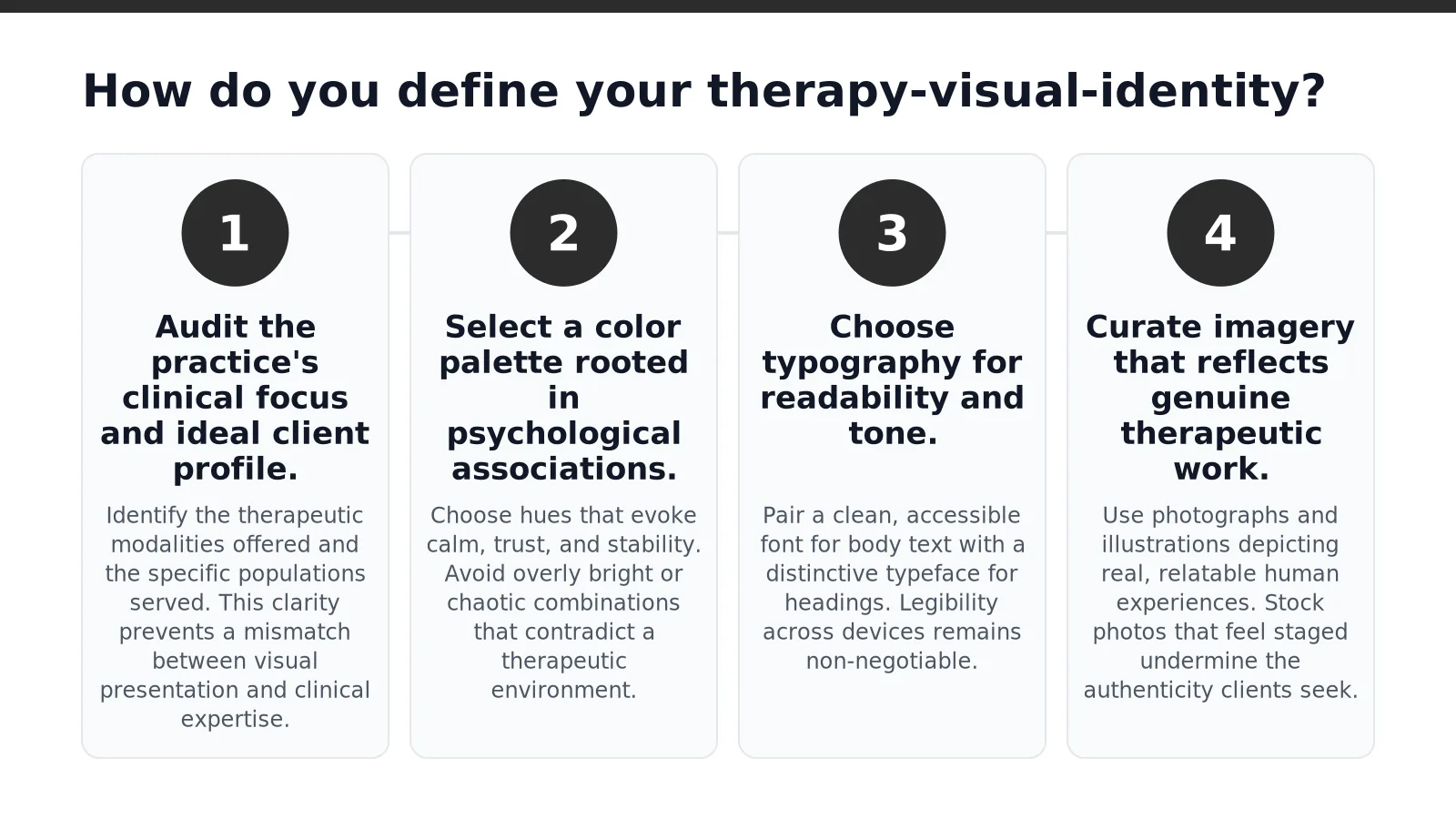
  1. Audit the practice's clinical focus and ideal client profile. Identify the therapeutic modalities offered and the specific populations served. This clarity prevents a mismatch between visual presentation and clinical expertise.

  2. Select a color palette rooted in psychological associations. Choose hues that evoke calm, trust, and stability. Avoid overly bright or chaotic combinations that contradict a therapeutic environment.

  3. Choose typography for readability and tone. Pair a clean, accessible font for body text with a distinctive typeface for headings. Legibility across devices remains non-negotiable.

  4. Curate imagery that reflects genuine therapeutic work. Use photographs and illustrations depicting real, relatable human experiences. Stock photos that feel staged undermine the authenticity clients seek.

How do brand guidelines support ethical marketing?

Brand-guidelines-therapy documents ensure every visual choice aligns with professional codes such as APA and ACA. These guidelines maintain patient confidentiality while showcasing therapeutic value. We embed compliance directly into the design process, preventing marketing materials from ever compromising client privacy or making unsubstantiated claims. A documented visual standard protects the practice from reputational risk and regulatory scrutiny.

Why does logo design matter for therapists?

A professional therapist logo serves as the anchor of a practice's visual identity. A well-crafted mark signals legitimacy and specialization before a single word is read. The logo must scale from a website favicon to a printed intake form without losing clarity. Simplicity and relevance outperform complexity every time. A logo rooted in the practice's therapeutic philosophy reinforces the entire brand experience across every client touchpoint.

What are the first steps in logo-design-therapists?

A therapy logo is entirely optional. A private practice website does not require a logo to appear professional or to attract clients. The decision to pursue logo-design-therapists begins with a personal preference, not a marketing mandate. Many practitioners feel a logo adds legitimacy. That feeling is valid, but it is not a requirement for a successful practice.

Do I need a logo before launching my therapy website?

No. Launching a website without a logo does not harm your credibility. A clean, well-organized site with clear service descriptions and secure contact methods builds trust on its own. A logo can enhance the design later. It should never delay your launch.

The first concrete step is deciding who will create the visual mark. We guide practices through two clear paths. Each path suits different stages of practice growth and budget realities.

  1. Assess your internal capacity for design. Determine whether you have the time and skill to produce a simple, clean mark yourself. This path works for solo practitioners launching on a lean budget. The result must remain legible at small sizes and avoid complex imagery that distracts from the therapeutic message.

  2. Evaluate the need for a professional designer. Engage a specialist when your practice requires a custom mark that integrates seamlessly with a broader therapy-visual-identity. A professional delivers a cohesive result across every touchpoint.

  3. Align the logo timeline with your website project. We always recommend integrating logo creation with website design. A mark built in isolation often clashes with the site's layout, color palette, or typography. Designing both together produces a unified visual-style-therapy that feels intentional and calming to potential clients.

Should I design my therapy logo myself or hire a professional?

The choice hinges on complexity and long-term brand goals. A self-made mark works for a straightforward, text-based identifier. A professional designer becomes essential when the brand-guidelines-therapy must extend across signage, print materials, and a full digital presence. We help practices avoid the costly mistake of redesigning a mark six months after launch because it failed to scale. A fragmented visual identity confuses visitors and weakens the perception of stability. That loss of trust is difficult to recover. Our HIPAA-compliant approach ensures that even the design process respects the ethical boundaries of mental health marketing. Mental Marketing Pros builds every visual element to support a trustworthy, accessible digital environment from the very first step.

How do you create brand-guidelines-therapy?

Creating brand-guidelines-therapy starts with documenting the visual and ethical standards that define a practice. A cohesive therapy-visual-identity emerges when colors, typography, and imagery work together across every client touchpoint. Without documented guidelines, practices lose the unified professional image that builds prospective client trust before the first phone call.

What elements belong in therapy brand guidelines?

A complete brand guideline document captures four core components. First, define the color palette with primary and secondary hex codes. Second, specify typography choices for headings and body text. Third, establish logo usage rules including minimum size and clear-space requirements. Fourth, set imagery standards that reflect the practice's therapeutic approach. Designing the logo and website together creates a more cohesive visual identity, with colors, typography, and imagery that work naturally across the entire site, according to Design for Therapists.

How do ethical standards shape therapy brand guidelines?

Ethical compliance forms the backbone of any brand-guidelines-therapy document. Mental Marketing Pros integrates HIPAA-compliant marketing requirements directly into brand standards, aligning with professional codes from the APA and ACA. Patient confidentiality remains paramount while showcasing therapeutic value. Brand guidelines must specify secure contact methods, approved language for testimonials, and protocols for handling client information in marketing materials. These rules protect both the practice and the people it serves.

The visual-style-therapy standards we develop follow a structured sequence:

  1. Audit existing marketing materials for consistency gaps.

  2. Select a color palette that evokes calm and professionalism.

  3. Choose accessible typography with clear readability on all devices.

  4. Define logo-design-therapists usage rules for every format.

  5. Document imagery guidelines that avoid triggering or stigmatizing visuals.

  6. Embed ethical review checkpoints into the content approval workflow.

AAMFT's partner content emphasizes that a brand is not a website's design or business cards. It is the experience and transformation therapy provides. Our guidelines capture that deeper promise while ensuring every brochure, social post, and landing page presents a unified professional image. Practices operating without documented standards risk confusing potential clients with inconsistent messaging across directories, social platforms, and their own websites.

How do you develop a visual-style-therapy?

A visual-style-therapy defines the complete aesthetic identity of a mental health practice. Developing this style requires deliberate choices about color, imagery, and consistency across every client touchpoint. Without a cohesive visual approach, practices lose the instant recognition that builds trust before a single session begins.

What elements make up a therapy visual identity?

A therapy-visual-identity encompasses far more than a single graphic. Colors, typography, photography, and layout all work together to communicate therapeutic values. The most effective identities evoke calm, trust, and professionalism. These qualities align directly with what prospective clients seek when choosing a mental health provider.

How do you avoid cliché imagery in therapy branding?

Generic lotus flowers and brain icons dominate the mental health landscape. Moving beyond these clichés helps a practice stand out authentically. We recommend imagery that reflects the practice's therapeutic approach or setting. A coastal practice might draw on shoreline elements. A trauma-informed clinic could reference growth and resilience without obvious symbols. The goal is distinctiveness that reflects genuine clinical identity.

How do you maintain consistency across platforms?

Brand-guidelines-therapy documents lock in every visual decision. These guidelines specify exact color codes, font pairings, and image treatments. Designing a logo and website together creates a more cohesive visual style, with colors, typography, and imagery that work naturally across an entire site. The same standards extend to social media profiles, intake forms, and printed materials. Inconsistency fragments recognition. A client who sees one palette on Instagram and another on a booking page experiences subtle disorientation. That friction reduces conversion.

Logo-design-therapists projects succeed when the final mark integrates seamlessly into this broader system. The logo is not an isolated asset. It anchors the full visual language. Every subsequent design choice references the logo's proportions, color temperature, and emotional tone. This disciplined approach transforms scattered marketing materials into a unified brand presence that signals reliability before the first phone call.

What common mistakes should you avoid?

Mental health practices lose client trust when visual branding mistakes go unchecked. A confusing logo or inconsistent design signals disorganization before a single session begins. We see three recurring errors that undermine therapy-visual-identity and drive prospective clients away.

Why do complex logos fail in therapy branding?

Abstract or intricate logo-design-therapists choices confuse rather than comfort. A logo should communicate safety and professionalism immediately. Overly complex imagery creates distance when the goal is connection. Simplicity builds recognition and trust.

How does skipping brand strategy damage your practice?

Diving into colors and fonts without a defined strategy produces scattered, ineffective branding. The instinct to prioritize aesthetics over substance is common among therapists launching a practice. Without clear brand-guidelines-therapy, every marketing piece tells a different story. This inconsistency erodes the cohesive visual-style-therapy that helps a practice feel established and reliable. A unified identity across your website, intake pages, and directory listings reassures potential clients that they have found a legitimate, organized practice.

What are the risks of ignoring HIPAA in visual marketing?

Neglecting HIPAA compliance in marketing materials creates serious ethical and legal exposure. HIPAA enforces strict rules about how client healthcare information is accessed and shared. Even visual elements like testimonial graphics or social media posts can inadvertently disclose protected details. Mental Marketing Pros ensures every visual asset remains HIPAA-compliant, protecting both your practice and your clients' confidentiality. A single compliance lapse damages reputation and invites regulatory scrutiny.

  1. Define your brand strategy first. Articulate your practice's core values, ideal client, and therapeutic approach before selecting any visual elements. This foundation guides every design decision.

  2. Choose a simple, recognizable logo. Select imagery that conveys warmth and professionalism without complexity. Test the design at small sizes to confirm legibility.

  3. Audit all materials for HIPAA compliance. Review every visual asset for potential privacy violations. Remove any element that could expose client information or imply an endorsement.

How do you measure the impact of your visual identity?

Measuring a therapy-visual-identity requires tracking concrete client actions. We monitor inquiry volume, website engagement, and conversion patterns to determine whether design choices resonate with potential clients. Without measurement, practices lose the opportunity to refine what attracts and converts visitors.

What metrics show that a therapy logo is working?

A logo-design-therapists investment proves its value through conversion data. We A/B test logo variations on intake landing pages to identify which design drives more completed contact forms. Effective therapist intake landing pages improve client onboarding and increase lead generation. These pages serve as the initial point of contact for prospective clients. Small design changes produce measurable differences in session bookings.

How do you know if your brand guidelines are effective?

Brand-guidelines-therapy effectiveness appears in client feedback and review patterns. We analyze whether prospective clients perceive the intended therapeutic values through visual cues. Mental Marketing upholds ethical standards aligned with APA and ACA professional codes. This commitment maintains patient confidentiality while showcasing therapeutic value. When reviews consistently reflect trust and professionalism, the visual identity communicates correctly.

What role does visual style play in client growth?

A cohesive visual-style-therapy approach directly influences practice growth. We conduct regular client growth audits that combine SEO best practices with content marketing analysis. Tracking inquiry sources reveals which visual elements attract qualified leads. Our therapist conversion optimization methods multiply bookings by two to five times without additional ad spend. Consistent measurement transforms visual identity from an aesthetic choice into a measurable growth asset.

FAQ

Is a logo necessary for my therapy practice?

A therapist logo is optional but can strengthen visual identity when designed alongside a website for cohesive branding.

What should I settle before designing my logo?

Settle the practice name, clinical focus, and target client demographic before any logo work begins. These elements shape the visual direction and ensure the design connects with the intended audience.

How does visual identity build trust with clients?

A cohesive visual identity communicates safety, professionalism, and reliability, signaling to prospective clients that the practice is organized and trustworthy. Consistent colors, typography, and imagery across all touchpoints reduce uncertainty and encourage engagement.

Conclusion

A logo and visual identity that communicate safety and professionalism, grounded in a defined strategy and enforced by brand guidelines, transforms scattered marketing into a unified signal of reliability. This disciplined approach, measured through conversion data and client feedback, turns an aesthetic choice into a measurable growth asset. The next step is to audit your current materials against these standards, ensuring every visual element reinforces the trust that brings clients through the door.