Meta Ads for Therapists: Reaching Clients
When it comes to meta-ads-therapists, meta Advertising reaches over 3 billion Facebook users, targeting people earlier in their decision-making process before they actively search for therapy. Mental Marketing, based in the US, builds these compassionate, targeted Facebook and Instagram campaigns to help mental health practices connect with individuals seeking support before they even pick up the phone.
Meta advertising through Facebook and Instagram reaches over 3 billion users, targeting people before they actively search for therapy. Unlike Google Ads, Meta ads build awareness and warm up prospective clients earlier in their decision-making process. We design HIPAA-compliant campaigns using Meta Ads Manager that protect confidentiality while positioning practices in front of the right audience.
Key Takeaways: How Meta Ads Help Therapists Reach Clients
Meta ads reach 3 billion Facebook users who aren't actively searching for therapy services.
Facebook advertising captures potential clients at different stages of their mental health journey.
Instagram and Facebook combined create a powerful social media marketing platform for therapists.
Mental Marketing helps US-based practices acquire new clients through targeted Meta advertising strategies.
Meta ads reach 3 billion Facebook users who aren't actively searching for therapy services.
Facebook advertising captures potential clients at different stages of their mental health journey.
Instagram and Facebook combined create a powerful social media marketing platform for therapists.
Mental Marketing helps US-based practices acquire new clients through targeted Meta advertising strategies.
Why Should Therapists Consider Paid Social Ads?
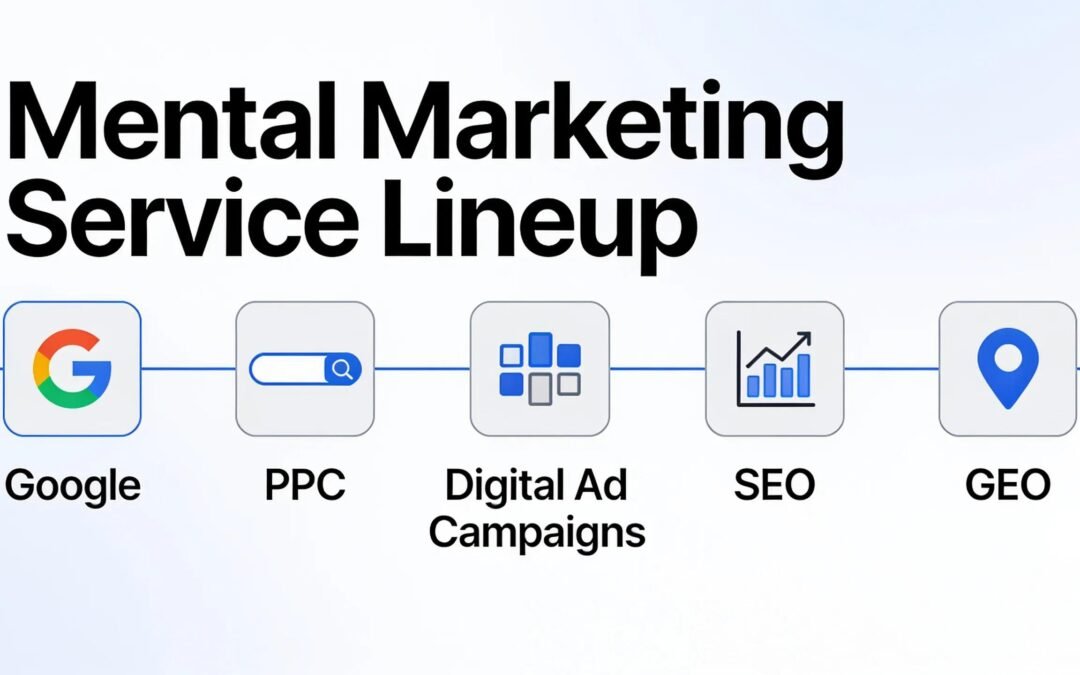
Paid social advertising reaches prospective clients before a crisis pushes them to search Google for help. Practices that ignore this channel may miss potential clients who are not yet aware they need therapy. Our service lineup pairs SEO and GEO with Google, PPC, and digital ad campaigns, giving practices multiple entry points for client acquisition rather than relying on search alone.
Meta ads for therapists work differently than search-based advertising. Google Ads captures people already typing in a search query, actively looking for support. Facebook and Instagram ads, by contrast, reach people who have not yet started that search but could still benefit from mental health services. That earlier reach matters, because it opens a pipeline search advertising cannot touch on its own.
What makes Instagram and Facebook ads useful for building a client pipeline?
Instagram therapy ads and their Facebook counterpart excel at building awareness before a prospective client feels ready to book. Rather than competing only for bottom-of-funnel searches, practices can warm up prospects earlier in the decision-making process. This groundwork often shortens the path to a first appointment once a prospect does begin searching.
How do paid social campaigns fit into a broader growth strategy?
Facebook therapy ads rarely work as a standalone tactic; they perform best folded into a full acquisition strategy. Our Wellness Booking Blueprint has helped practices multiply bookings, growing client bases significantly within a short period, by combining several channels rather than one.
Practices weighing paid social should ask a direct question: are we reaching people only when they search, or also before they start?
What Makes Meta Ads Different From Google Ads?
Search advertising captures demand that already exists; meta-ads-therapists campaigns create demand before a search ever happens. Google Ads reaches someone typing "therapist near me" at 11 p.m. Meta advertising, spanning both Facebook and Instagram under one platform, reaches that same person weeks earlier. Scrolling a feed and not yet naming their problem. We build our approach around this distinction, treating Meta as an awareness engine rather than a direct-response tool.
Our client acquisition and retention marketing strategy for therapists reflects that difference. We craft campaigns that introduce a practice's specialties and philosophy long before a prospective client starts comparing providers. Retention plays a role too. A follower who never books today may return to therapy six months from now already familiar with the brand.
Do Meta ads work as well as Google ads for therapists?
Neither channel replaces the other; each serves a separate stage of the client journey. Google captures urgency and intent. Meta builds recognition and trust over time, which matters for a service people often research quietly before committing.
Every campaign we run stays within HIPAA-compliant boundaries, protecting confidentiality while still communicating value clearly. This standard applies whether we are running facebook-therapy-ads for a solo practitioner or coordinating instagram-ads-therapy for a multi-location group practice.
We tailor every plan to the practice model, whether insurance-based or self-pay, so ad spend matches how each client actually books care.
How Does Meta Ads Manager Actually Work?
A single dashboard controls every campaign across both networks. Meta ads for therapists run through Meta Ads Manager, which manages Facebook and Instagram advertising from one place. No separate login exists for each platform; every dollar spent and every audience targeted flows through this shared system.
That structure matters for practice owners who lack time to master two ad systems separately. We build every campaign on three levels, and understanding them prevents wasted budget.
Campaign level — the objective lives here. We choose whether the goal is traffic, lead generation, or conversions, since this choice shapes how Meta's algorithm spends the budget.
Ad set level — audience and budget get defined here. Age range, location, interests, and daily spend all live at this layer.
Ad level — the creative itself sits here, including images, video, and copy shown to the audience selected above.
Campaign level — the objective lives here. We choose whether the goal is traffic, lead generation, or conversions, since this choice shapes how Meta's algorithm spends the budget.
Ad set level — audience and budget get defined here. Age range, location, interests, and daily spend all live at this layer.
Ad level — the creative itself sits here, including images, video, and copy shown to the audience selected above.
Do Facebook and Instagram Ads Use the Same Settings?
Yes. Because both platforms share Meta Ads Manager, one campaign can run identical targeting and budget rules across Facebook and Instagram simultaneously. This makes Instagram ads for therapy practices simple to launch alongside Facebook placements, without duplicating setup work.
Does This Fit Into a Broader Marketing Plan?
Facebook therapy ads rarely work best as a standalone tactic. Our digital ad campaign services extend across Google, PPC, and paid social, so Meta campaigns reinforce search-based visibility rather than competing with it.
Growth from paid social carries a practical consequence many practices overlook: increased inquiry volume. We help clinics prepare with waitlist systems and managed-expansion strategies. Demand generated by these campaigns does not overwhelm scheduling capacity before staff can absorb it.
Why Do Facebook Ads Suit Mental Health Marketing?
Scale answers the question best. Facebook connects over 3 billion people worldwide, giving practices a pool of potential clients far larger than any local search campaign could reach alone. That scale matters because therapy decisions rarely happen the moment someone sees an ad; they build over weeks. Meta ads for therapists work precisely because the platform keeps a practice visible during that entire deliberation window.
We build every campaign around ethical standards, not just impressions. Our approach to Facebook therapy ads aligns with professional codes set by the APA and ACA. We design each ad to protect patient confidentiality while still communicating real therapeutic value. No campaign we run trades compliance for reach.
How does Facebook's algorithm actually help a practice get booked?
Facebook's targeting system identifies users who are already researching therapy-related topics online. It then places relevant ads in front of them repeatedly. A practice stays top-of-mind until that person feels ready to schedule an appointment. This repeated, low-pressure exposure is what separates awareness advertising from a one-time search result.
Does Instagram play a role too?
Yes. Because Meta manages both networks jointly, Instagram advertising for therapy practices runs through the same targeting infrastructure as Facebook, reaching younger and visually-driven audiences without duplicating campaign setup.
Three factors make this channel worth a practice's marketing budget:
Reach: Billions of active users across two platforms
Timing: Ads appear before someone actively searches, not just after
Compliance: Campaigns built around confidentiality and professional ethics from the start
Reach: Billions of active users across two platforms
Timing: Ads appear before someone actively searches, not just after
Compliance: Campaigns built around confidentiality and professional ethics from the start
We design these campaigns for sustained growth, not a short-lived spike in bookings, so results compound over months rather than disappearing after one boosted post.
What Ethical And HIPAA Rules Apply To Ads?
HIPAA governs every ad our practice partners run, whether the campaign lives on a search engine or inside a social feed. Skipping this layer risks fines, damaged trust, and clients who feel exposed rather than protected. We treat HIPAA compliance as the foundation of meta-ads-therapists campaigns, not an afterthought bolted on after launch.
The Health Insurance Portability and Accountability Act sets firm limits on how a client's healthcare information gets accessed and shared. That standard does not pause at the edge of a marketing plan. Ad copy, testimonial snippets, and even retargeting audiences built from website visitors all fall under the same scrutiny.
What Must Happen Before A Client's Story Appears In An Ad?
Written, informed consent comes first, every time. We confirm confidentiality holds throughout the entire content-creation process, then store any collected material on secure, access-controlled platforms. No exceptions get made for a compelling quote or a high-converting testimonial.
Do Instagram And Facebook Ads Follow Different Rules Than Google Ads?
The platform changes; the compliance standard does not. Instagram-ads-therapy campaigns and facebook-therapy-ads placements demand the same consent, confidentiality, and secure-storage protocols as any other channel.
We build every campaign around three non-negotiables:
Informed consent documented before any client detail reaches an ad
Confidentiality preserved across drafting, approval, and publishing stages
Secure platforms used for storing and managing testimonial or feedback data
Informed consent documented before any client detail reaches an ad
Confidentiality preserved across drafting, approval, and publishing stages
Secure platforms used for storing and managing testimonial or feedback data
Beyond HIPAA itself, we align our methods with professional codes set by the APA and ACA. These associations reinforce patient confidentiality while still allowing practices to showcase real therapeutic value. Practices that ignore these codes risk more than penalties; they risk the trust clients place in mental health care itself.
How Should Instagram Ads Target Therapy Clients?
Effective targeting reaches prospective clients before they begin actively searching for a therapist. Meta ads for therapists, including campaigns run on Instagram, operate through the same advertising system as Facebook, allowing practices to reach people earlier in their decision-making process rather than waiting for a direct search. Practices that skip this earlier window lose potential clients to competitors who show up first, at the moment awareness begins to form.
We build Instagram therapy ad campaigns around compassionate, precisely targeted messaging. Compassionate, targeted campaigns on Instagram and Facebook connect a practice's services with the individuals and families who need them most, without relying on generic or impersonal outreach. Precision matters more than volume here.
What makes Instagram targeting different from a Google search ad?
Google captures demand that already exists; Instagram creates awareness before it forms. Our audience targeting draws on the same SEO expertise we apply to therapist websites, translating keyword and intent research into interest, behavior, and demographic targeting suited to mental health services.
Does ad creative matter as much as targeting?
Creative carries equal weight. Branding and identity work ensures every ad reflects a consistent, trustworthy visual and message tone, which builds recognition before a prospective client ever visits the website.
Strong Facebook therapy ad and Instagram campaigns share several targeting components:
Interest and behavior signals tied to mental wellness topics
Location targeting matched to service area and licensure
Consistent branding across every ad variation
Messaging calibrated to where a prospect sits in their decision journey
Interest and behavior signals tied to mental wellness topics
Location targeting matched to service area and licensure
Consistent branding across every ad variation
Messaging calibrated to where a prospect sits in their decision journey
We treat targeting and creative as one system, not separate tasks. Misalignment between the two wastes ad spend and erodes trust before a first appointment is ever booked.
What Fast Steps Launch A Practice's First Campaign?
Four steps take a therapy practice from zero to a running campaign: prepare the digital front door, set clear compliance guardrails, build the ad, and monitor results. Skipping any one of these steps often leads to wasted ad spend and stalled bookings. We treat this sequence as non-negotiable for every practice we onboard.
Setting up Facebook therapy ads can become a long, confusing process for practices new to paid advertising. That confusion is exactly why a structured plan matters more than trial and error. Practices that rush straight to "boost post" without a plan tend to burn budget on the wrong audience.
What should be ready before a campaign goes live?
A professionally designed website and secure, HIPAA-aware contact methods need to exist before any traffic arrives. Sending paid clicks to a slow or non-compliant site wastes budget and risks client trust. We build this foundation first, then layer paid social on top of it.
How does Meta advertising fit into the launch sequence?
Facebook's advertising platform proves especially useful for promoting mental health services once campaigns are configured correctly. Meta ads for therapists work best when paired with a clear intake pathway. Our agency, based in the United States, plans every Instagram therapy ad campaign with domestic compliance requirements built in from day one.
A practical launch sequence looks like this:
Finalize a compliant, mobile-ready website with secure booking or contact forms.
Define audience parameters and messaging boundaries within Meta Ads Manager.
Build and review ad creative for accuracy and confidentiality standards.
Launch, monitor early performance, and adjust targeting weekly.
Finalize a compliant, mobile-ready website with secure booking or contact forms.
Define audience parameters and messaging boundaries within Meta Ads Manager.
Build and review ad creative for accuracy and confidentiality standards.
Launch, monitor early performance, and adjust targeting weekly.
Following this order protects both compliance and budget. Practices that follow it also reach readiness for their first campaign far faster than those improvising each step alone.
How Do You Measure And Scale Ad Results?
Measurement starts with a benchmark, not a vanity metric. Our Wellness Booking Blueprint approach gives practices a concrete standard: campaigns are built to multiply bookings by two to five times within a short window. Click volume and impressions matter far less than actual appointments booked and retained.
Scaling paid social, whether through Meta ads for therapists or a standalone Instagram therapy ad push, demands more than a bigger budget. Long-term positioning matters more than a temporary spike in visibility. We design campaigns for sustained growth, not a one-week surge that fades once spending stops. A practice that stands out consistently, month after month, builds the kind of market position competitors struggle to match.
How do we know when to scale ad spend?
Scaling makes sense once intake capacity can absorb the new demand a campaign generates. Before increasing budget, we help practices build a waitlist or put a managed-expansion plan in place, so growth does not overwhelm clinicians or hurt care quality.
What counts as a successful mental health ad campaign?
Success is not just clicks or cost-per-lead. A properly run Facebook therapy ad campaign should be judged on whether it reduces stigma, educates the public, and moves someone toward actually seeking care.
Practices evaluating results should track:
Bookings generated, measured against the 2-5x benchmark rather than raw impressions
Retention and intake capacity, confirming a waitlist or expansion plan exists before scaling spend
Educational reach, meaning whether the campaign informs and de-stigmatizes rather than just generating traffic
Consistency over time, since sustained visibility outperforms short bursts of engagement
Bookings generated, measured against the 2-5x benchmark rather than raw impressions
Retention and intake capacity, confirming a waitlist or expansion plan exists before scaling spend
Educational reach, meaning whether the campaign informs and de-stigmatizes rather than just generating traffic
Consistency over time, since sustained visibility outperforms short bursts of engagement
We treat these four indicators as the foundation for every scaling decision we make with a practice.
Social media advertising through Facebook and Instagram represents a strategic imperative for mental health practices seeking to expand their client base while maintaining ethical standards and regulatory compliance. By implementing targeted campaigns grounded in HIPAA-compliant practices, clinicians establish meaningful connections with individuals actively seeking therapeutic support. The integration of authentic client testimonials, professional branding, and secure contact mechanisms transforms social platforms into reliable channels for sustainable practice growth. Mental health professionals who leverage these tools strategically position themselves to reach underserved populations and build thriving, client-centered practices.
How are Meta ads different from Google Ads for therapists?
Google Ads captures people already searching for a therapist. Meta ads reach prospective clients earlier, while scrolling their feed before naming their problem. This builds awareness before a search ever happens.
Are Meta ad campaigns HIPAA-compliant?
Yes, Mental Marketing designs HIPAA-compliant campaigns using Meta Ads Manager that protect confidentiality while positioning practices in front of the right audience.
Should Facebook and Instagram ads replace other marketing channels?
No, Meta ads work best combined with other channels rather than as a standalone tactic. The Wellness Booking Blueprint combines several channels together to multiply bookings for practices.
Mental Marketing is located in US.